
Xiongnu (French Wikipedia)
Analysis of information sources in references of the Wikipedia article "Xiongnu" in French language version.
Last modified:
Ref.Un. Ref.Website
Global rank
French rank
3rd place
8th place
6th place
32nd place
1st place
2nd place
low place
low place
103rd place
7th place
105th place
167th place
1,171st place
1,853rd place
6,227th place
9,719th place
low place
low place
1,233rd place
144th place
207th place
147th place
6,055th place
1,885th place
182nd place
214th place
327th place
931st place
37th place
145th place
2,786th place
3,290th place
410th place
5,883rd place
1,811th place
1,722nd place
low place
low place
125th place
9th place
low place
low place
low place
low place
low place
low place
109th place
251st place
low place
low place
academia.edu (Global: 105th place; French: 167th place)
- , p. 31.
- Étienne Vaissière, « Xiongnu », Encyclopedia Iranica.
- (en) Miller et al., Elite Xiongnu Burials at the Periphery: Tomb Complexes at Takhiltyn Khotgor, Mongolian Altai, p.301-314, 2009.
archaemongolia.com (Global: low place; French: low place)
- « Quelques jalons de l'archéologie xiongnu au 20e siècle », sur Gol Mod — Mission archéologique française en Mongolie.
archive.org (Global: 6th place; French: 32nd place)
- Bailey 1985, p. 21–45. Harold W. Bailey, Indo-Scythian Studies : being Khotanese Texts, VII, Cambridge University Press, (JSTOR 312539, lire en ligne)
- China : Dawn of a Golden Age, 200–750 AD, Metropolitan Museum of Art, , 392 p. (ISBN 978-1-58839-126-1, lire en ligne), 18–
« sima. »
. - Jacques Gernet, A history of Chinese civilization, Cambridge University Press, (ISBN 0-521-49781-7, lire en ligne
 ), 200
« kao-ch'ang northern liang family turfan kingdom. »
. - Henry H. (Henry Hoyle) Howorth, History of the Mongols from the 9th to the 19th century, London : Longmans, Green (lire en ligne).
- Helfen-Otto Maenchen,-Helfen, The World of the Huns : Studies of Their History and Culture, pp.371., Berkeley, California, University of California Press, (lire en ligne), p. 371.
- Otto Maenchen-Helfen, The World of the Huns : studies in their history and culture, UC Berkeley, University of California Press, , 1re éd., 602 p. (ISBN 0-520-01596-7, lire en ligne), 370–371.

archivesaudiovisuelles.fr (Global: low place; French: low place)
- Jean-Paul Desroches, « Que savons-nous des Khunnu, maîtres de la Mongolie du IIIe siècle avant notre ère au IIe siècle de notre ère ? », Archives audiovisuelle de la recherche.
biorxiv.org (Global: 6,055th place; French: 1,885th place)
- Zoltán Maróti et al., Whole genome analysis sheds light on the genetic origin of Huns, Avars and conquering Hungarians, biorxiv.org, 20 janvier 2022, doi.org/10.1101/2022.01.19.476915
- (en) Choongwon Jeong et al., A dynamic 6,000-year genetic history of Eurasia’s Eastern Steppe, biorxiv.org, 26 mars 2020, https://doi.org/10.1101/2020.03.25.008078.
books.google.be (Global: 1,233rd place; French: 144th place)
- Marie Favereau, Les Mongols et le monde: l'autre visage de l'empire de Gengis Khan, Les Éditions du Château des ducs de Bretagne (Musée d'histoire de Nantes), (ISBN 978-2-906519-81-7, lire en ligne), p. 86-89
books.google.com (Global: 3rd place; French: 8th place)
- Beckwith 2009, p. 51–52, 404–405. (en) Christopher I. Beckwith, Empires of the Silk Road : a history of Central Eurasia from the Bronze Age to the present, Princeton (N.J.), Princeton University Press, , 472 p. (ISBN 978-0-691-13589-2, lire en ligne)
- Harmatta 1994, p. 488: "Their royal tribes and kings (shan-yii) bore Iranian names and all the Hsiung-nu words noted by the Chinese can be explained from an Iranian language of Saka type. It is therefore clear that the majority of Hsiung-nu tribes spoke an Eastern Iranian language.". János Harmatta, History of Civilizations of Central Asia: The Development of Sedentary and Nomadic Civilizations, 700 B. C. to A. D. 250, UNESCO, (ISBN 978-9231028465, lire en ligne), « Conclusion », p. 485–492
- (en) Li Feng, Early China : A Social and Cultural History, Cambridge et New York, Cambridge University Press, , 345 p. (ISBN 978-0-521-89552-1, présentation en ligne), p. 268.
- Beckwith 2009, p. 71–73. (en) Christopher I. Beckwith, Empires of the Silk Road : a history of Central Eurasia from the Bronze Age to the present, Princeton (N.J.), Princeton University Press, , 472 p. (ISBN 978-0-691-13589-2, lire en ligne)
- Qian Sima et Burton Watson, Records of the Grand Historian : Han dynasty, Renditions-Columbia University Press, , 243 p. (ISBN 978-0-231-08166-5, lire en ligne), p. 161–.
- Monumenta Serica, H. Vetch, (lire en ligne), p. 81.
- Frederic E. Wakeman, The Great Enterprise : The Manchu Reconstruction of Imperial Order in Seventeenth-century China, University of California Press, , 1337 p. (ISBN 978-0-520-04804-1, lire en ligne), p. 41–.
- Lin Jianming (林剑鸣), 秦漢史 (History of Qin and Han), Wunan Publishing, (ISBN 978-957-11-0574-1, lire en ligne), p. 557–8.
- James A. Millward, Eurasian crossroads : a history of Xinjiang, Columbia University Press, , 440 p. (ISBN 978-0-231-13924-3, lire en ligne), p. 20.
- Julia Lovell, The Great Wall : China Against the World, 1000 BC – AD 2000, Grove Press, , 412 p. (ISBN 978-0-8021-4297-9, lire en ligne), p. 73.
- Alfred J. Andrea et James H. Overfield, The Human Record : To 1700, Houghton Mifflin, , 485 p. (ISBN 978-0-395-87087-7, lire en ligne), p. 165.
- Yiping Zhang, Story of the Silk Road, China Intercontinental Press, , 176 p. (ISBN 978-7-5085-0832-0, lire en ligne), p. 22.
- Charles Higham, Encyclopedia of ancient Asian civilizations, Infobase Publishing, , 440 p. (ISBN 978-0-8160-4640-9, lire en ligne), p. 409.
- Indian Society for Prehistoric et Quaternary Studies, Man and environment, Volume 23, Issue 1, Indian Society for Prehistoric and Quaternary Studies., (lire en ligne), p. 6.
- Adrienne Mayor, The Amazons : Lives and Legends of Warrior Women across the Ancient World, Princeton University Press, , 536 p. (ISBN 978-1-4008-6513-0, lire en ligne), p. 422–.
- Ying-shih Yü, The Cambridge History of China, Volume 1 : The Ch'in and Han Empires, 221 BC – AD 220, Cambridge, Cambridge University Press, , 1024 p. (ISBN 978-0-521-24327-8, lire en ligne), « Han Foreign Relations », p. 384.
- (Beckwith 2009, p. 405): "Accordingly, the transcription now read as Hsiung- nu may have been pronounced *Soγdâ, *Soγlâ, *Sak(a)dâ, or even *Skla(C)da, etc.". (en) Christopher I. Beckwith, Empires of the Silk Road : a history of Central Eurasia from the Bronze Age to the present, Princeton (N.J.), Princeton University Press, , 472 p. (ISBN 978-0-691-13589-2, lire en ligne)
- (en) Craig Benjamin (2007, 49), In: Hyun Jin Kim, The Huns, Rome and the Birth of Europe. Cambridge University Press. 2013. page 176.
- James A. Millward et Peter C. Perdue, Xinjiang : China's Muslim Borderland, M. E. Sharpe, (ISBN 978-0-7656-1318-9, lire en ligne), « Chapter 2: Political and Cultural History of the Xinjiang Region through the Late Nineteenth Century », p. 40–41.
- (en) Susan J. Henders, Democratization and identity : regimes and ethnicity in East and Southeast Asia, Lanham (Md.), Lexington Books, , 267 p. (ISBN 978-0-7391-0767-6 et 0-7391-0767-4, lire en ligne), p. 135.
- J. Todd Reed et Diana Raschke, The ETIM : China's Islamic Militants and the Global Terrorist Threat, ABC-CLIO, , 244 p. (ISBN 978-0-313-36540-9, lire en ligne), p. 7.
books.google.fr (Global: 125th place; French: 9th place)
- (en) Jason Neelislire, Early Buddhist Transmission and Trade Networks: Mobility and Exchange Within and beyond the Northwestern Borderlands of South Asia, Brill, coll. « Dynamics in the history of religion » (no 2), (ISBN 978-90-04-18159-5, ISSN 1878-8106, lire en ligne)
britannica.com (Global: 37th place; French: 145th place)
global.britannica.com
- « Xiongnu People », sur britannica.com, Encyclopædia Britannica (consulté le ).
china.org.cn (Global: 1,811th place; French: 1,722nd place)
- (en) « Sand-covered Hun City Unearthed », Chine, China.
chosun.com (Global: 327th place; French: 931st place)
monthly.chosun.com
- (ko) Cho Gab-je, Ko : 騎馬흉노국가 新羅 연구 趙甲濟(月刊朝鮮 편집장)의 심층취재 내 몸속을 흐르는 흉노의 피, Monthly Chosun (lire en ligne).
news.chosun.com
- (ko) Ko : 경주 사천왕사(寺) 사천왕상(四天王像) 왜 4개가 아니라 3개일까, 조선일보, (lire en ligne [archive du ]).
dankook.ac.kr (Global: low place; French: low place)
user.dankook.ac.kr
- Tumen D., "Anthropology of Archaeological Populations from Northeast Asia « https://web.archive.org/web/20130729140858/http://user.dankook.ac.kr/~oriental/Journal/pdf_new/49/11.pdf »(Archive.org • Wikiwix • Que faire ?), page 25, 27.
dartmouth.edu (Global: 2,786th place; French: 3,290th place)
- Pulleyblank 2000, p. 20. (en) Edwin G. Pulleyblank, « Ji 姬 and Jiang 姜: The Role of Exogamic Clans in the Organization of the Zhou Polity », Early China, vol. 25, no 25, , p. 1–27 (DOI 10.1017/S0362502800004259, lire en ligne [archive du ] [PDF], consulté le )
doi.org (Global: 2nd place; French: 3rd place)
dx.doi.org
- Jingyi Gao 高晶一, « 確定夏國及凱特人的語言為屬於漢語族和葉尼塞語系共同詞源 » [« Xia and Ket Identified by Sinitic and Yeniseian Shared Etymologies »], Central Asiatic Journal, vol. 60, nos 1–2, , p. 51–58 (DOI 10.13173/centasiaj.60.1-2.0051, JSTOR 10.13173/centasiaj.60.1-2.0051).
- Pulleyblank 2000, p. 20. (en) Edwin G. Pulleyblank, « Ji 姬 and Jiang 姜: The Role of Exogamic Clans in the Organization of the Zhou Polity », Early China, vol. 25, no 25, , p. 1–27 (DOI 10.1017/S0362502800004259, lire en ligne [archive du ] [PDF], consulté le )
- 又《漢書》:“使王烏等窺匈奴。法,漢使不去節,不以墨黥面,不得入穹盧。王烏等去節、黥面,得入穹盧,單於愛之。” extrait duYouyang zazu, Scroll 8, version française basé sur la traduction en anglais du texte original chinois parue dans Carrie E. Reed, « Tattoo in Early China », Journal of the American Oriental Society, vol. 120, no 3, , p. 360–376 (DOI 10.2307/606008, JSTOR 606008).
- Thomas J. Barfield, « The Hsiung-nu imperial confederacy: Organization and foreign policy », The Journal of Asian Studies, vol. 41, no 1, , p. 45–61 (DOI 10.2307/2055601, JSTOR 2055601).
- Sophia-Karin Psarras, « Han and Xiongnu: A Reexamination of Cultural and Political Relations », Monumenta Serica, vol. 51, , p. 55–236 (DOI 10.1080/02549948.2003.11731391, JSTOR 40727370).
doi.org
- (en) Choongwon Jeong et al., A dynamic 6,000-year genetic history of Eurasia’s Eastern Steppe, biorxiv.org, 26 mars 2020, https://doi.org/10.1101/2020.03.25.008078.
ejournals.eu (Global: low place; French: low place)
- "Once again on the etymology of the title qaγan" Alexander Vovin (Honolulu) – Studia Etymologica Cracoviensia vol. 12 Kraków 2007 (http://ejournals.eu/sj/index.php/SEC/article/viewFile/1100/1096).
ethz.ch (Global: 2,203rd place; French: 2,130th place)
isn.ethz.ch
- Nabijan Tursun, « The Formation of Modern Uyghur Historiography and Competing Perspectives toward Uyghur History », The China and Eurasia Forum Quarterly, vol. 6, no 3, , p. 87–100 (lire en ligne).
exdat.com (Global: low place; French: low place)
rudocs.exdat.com
- « Об эт нической принадлежности Хунну », sur rudocs.exdat.com.
geographic.hu (Global: low place; French: low place)
- (en) « National Geographic ».
google.com (Global: 109th place; French: 251st place)
issn.org (Global: 33rd place; French: 4th place)
portal.issn.org
- (en) Jason Neelislire, Early Buddhist Transmission and Trade Networks: Mobility and Exchange Within and beyond the Northwestern Borderlands of South Asia, Brill, coll. « Dynamics in the history of religion » (no 2), (ISBN 978-90-04-18159-5, ISSN 1878-8106, lire en ligne)
jstor.org (Global: 23rd place; French: 73rd place)
- Bailey 1985, p. 21–45. Harold W. Bailey, Indo-Scythian Studies : being Khotanese Texts, VII, Cambridge University Press, (JSTOR 312539, lire en ligne)
- Jingyi Gao 高晶一, « 確定夏國及凱特人的語言為屬於漢語族和葉尼塞語系共同詞源 » [« Xia and Ket Identified by Sinitic and Yeniseian Shared Etymologies »], Central Asiatic Journal, vol. 60, nos 1–2, , p. 51–58 (DOI 10.13173/centasiaj.60.1-2.0051, JSTOR 10.13173/centasiaj.60.1-2.0051).
- 又《漢書》:“使王烏等窺匈奴。法,漢使不去節,不以墨黥面,不得入穹盧。王烏等去節、黥面,得入穹盧,單於愛之。” extrait duYouyang zazu, Scroll 8, version française basé sur la traduction en anglais du texte original chinois parue dans Carrie E. Reed, « Tattoo in Early China », Journal of the American Oriental Society, vol. 120, no 3, , p. 360–376 (DOI 10.2307/606008, JSTOR 606008).
- Thomas J. Barfield, « The Hsiung-nu imperial confederacy: Organization and foreign policy », The Journal of Asian Studies, vol. 41, no 1, , p. 45–61 (DOI 10.2307/2055601, JSTOR 2055601).
- Sophia-Karin Psarras, « Han and Xiongnu: A Reexamination of Cultural and Political Relations », Monumenta Serica, vol. 51, , p. 55–236 (DOI 10.1080/02549948.2003.11731391, JSTOR 40727370).
nature.com (Global: 207th place; French: 147th place)
- (en) Endre Neparaczki et al., Y-chromosome haplogroups from Hun, Avar and conquering Hungarian period nomadic people of the Carpathian Basin, Scientific Reports, volume 9, Article numéro: 16569, novembre 2019.
- (en) Peter de Barros Damgaard et al., 137 ancient human genomes from across the Eurasian steppes, Nature, volume 557, pages 369–374 (2018).
persee.fr (Global: 310th place; French: 27th place)
pressian.com (Global: low place; French: low place)
- (ko) 김운회, Ko:김운회의 '대쥬신을 찾아서' <23> 금관의 나라, 신라”, 프레시안, (lire en ligne).
silkroadfoundation.org (Global: low place; French: low place)
- David Purcell, « Maps of the Xiongnu Cemetery at Tamiryn Ulaan Khoshuu, Ogii nuur, Arkhangai Aimag, Mongolia », The Silk Road, vol. 9, , p. 143–145 (lire en ligne).
- David Purcell et Kimberly Spurr, « Archaeological Investigations of Xiongnu Sites in the Tamir River Valley », The Silk Road, vol. 4, no 1, , p. 20–31 (lire en ligne).
- Guolong Lai, « The Date of the TLV Mirrors from the Xiongnu Tombs », The Silk Road, vol. 4, no 1, , p. 34–43 (lire en ligne).
springer.com (Global: 182nd place; French: 214th place)
link.springer.com
- (en) Keyser, C., Zvénigorosky, V., Gonzalez, A. et al., Genetic evidence suggests a sense of family, parity and conquest in the Xiongnu Iron Age nomads of Mongolia, Human Genetics, 30 juillet 2020, doi.org/10.1007/s00439-020-02209-4.
uni-bonn.de (Global: 6,227th place; French: 9,719th place)
vfgarch.uni-bonn.de
- Ursula Brosseder, Bryan Miller et Jan Bemmann (dir.), Xiongnu Archaeology, Bonn, Vor- und Fruhgeschichtliche Archaeologie Rheinische Friedrich-Wilhelms-Universitat Bonn, , 653 p. (ISBN 978-3-936490-14-5, lire en ligne).
- Bryan Miller, Xiongnu Archaeology, Bonn, Vor- und Fruhgeschichtliche Archaologie Rheinische Friedrich-Wilhelms-Universitat Bonn, , 653 p. (ISBN 978-3-936490-14-5, lire en ligne), p. 23.
- Bryan Miller, Xiongnu Archaeology, Bonn, Vor- und Fruhgeschichtliche Archaologie Rheinische Friedrich-Wilhelms-Universitat Bonn, , 653 p. (ISBN 978-3-936490-14-5, lire en ligne), p. 24.
uqam.ca (Global: 4,839th place; French: 405th place)
classiques.uqam.ca
- René Grousset, L’Empire des steppes, Attila, Gengis-Khan, Tamerlan, Paris, Éditions Payot, , 4e éd., 620 p. (lire en ligne).
washington.edu (Global: 1,171st place; French: 1,853rd place)
depts.washington.edu
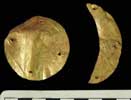
- « Sun and Moon » [JPG], sur depts.washington.edu.
- « Xiongnu Archaeology », sur depts.washington.edu.
- (en) [PDF] Camilla Trever, Excavations in Northern Mongolia (1924–1925), J. Fedorov Printing House, Leningrad, 1932.
web.archive.org (Global: 1st place; French: 2nd place)
- Tumen D., "Anthropology of Archaeological Populations from Northeast Asia « https://web.archive.org/web/20130729140858/http://user.dankook.ac.kr/~oriental/Journal/pdf_new/49/11.pdf »(Archive.org • Wikiwix • Que faire ?), page 25, 27.
- Pulleyblank 2000, p. 20. (en) Edwin G. Pulleyblank, « Ji 姬 and Jiang 姜: The Role of Exogamic Clans in the Organization of the Zhou Polity », Early China, vol. 25, no 25, , p. 1–27 (DOI 10.1017/S0362502800004259, lire en ligne [archive du ] [PDF], consulté le )
- (ko) Ko : 경주 사천왕사(寺) 사천왕상(四天王像) 왜 4개가 아니라 3개일까, 조선일보, (lire en ligne [archive du ]).
wikiwix.com (Global: 103rd place; French: 7th place)
archive.wikiwix.com
- Tumen D., "Anthropology of Archaeological Populations from Northeast Asia « https://web.archive.org/web/20130729140858/http://user.dankook.ac.kr/~oriental/Journal/pdf_new/49/11.pdf »(Archive.org • Wikiwix • Que faire ?), page 25, 27.
- (ko) « 자료검색>상세_기사 | 국립중앙도서관 », sur nl.go.kr via Wikiwix (consulté le ).
zh.wikisource.org (Global: 410th place; French: 5,883rd place)
- 又《漢書》:“使王烏等窺匈奴。法,漢使不去節,不以墨黥面,不得入穹盧。王烏等去節、黥面,得入穹盧,單於愛之。” extrait duYouyang zazu, Scroll 8, version française basé sur la traduction en anglais du texte original chinois parue dans Carrie E. Reed, « Tattoo in Early China », Journal of the American Oriental Society, vol. 120, no 3, , p. 360–376 (DOI 10.2307/606008, JSTOR 606008).